



October 22, 2025
The rise of timber tech: How innovation in lumber research may challenge structural steel and concrete framing

For decades, steel and concrete have been the dominant framing materials, prized for their strength and durability. But that dominance comes with a price: high carbon emissions, escalating material costs, heavy weight and supply chain volatility. As climate regulations tighten and clients demand greener solutions, the pressure is on to find viable alternatives.
We’ve seen alternative source materials such as mass timber gain traction as a more sustainable and aesthetic option. With the growing popularity and demand, we’re also seeing more innovation happen, expanding what’s possible with timber.
These new material technologies, born from breakthroughs in research and development, promise the strength of steel at a fraction of the environmental cost.
What is engineered wood and how is it made?
A standout contender in this space is an engineered wood product, known as Superwood, that has been chemically modified and physically densified to dramatically enhance its structural properties.
Superwood
Developed by InventWood, a University of Maryland spin-off, Superwood undergoes a proprietary process that removes lignin, the natural glue in wood, and compresses the remaining cellulose structure.
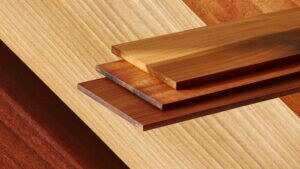
The result is a wood product up to 23 times stronger than its natural form, which approaches, and in some cases exceeds, the tensile strength of steel. It also is hard, smooth, and water-resistant.
Key benefits
- Up to 23 times stronger than its natural form and may exceed the tensile strength of steel
- Sourced from fast-growing, low-grade woods
- Up to 80% lighter than steel
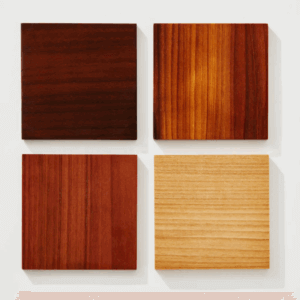
- Visually refined: often features a darker, finished look
- Produces a dense, strong and fire-resistant product
This and similar technologies represent a new category of structural wood: strong, sustainable and scalable.
Performance comparison: wood vs. steel
In lab conditions, densified wood products like Superwood have shown tensile strengths comparable to steel. They also exhibit greater impact resistance and surface hardness, opening the door for use in high-performance environments.
When treated, these materials offer impressive fire resistance, moisture resistance, and in some tests, even ballistic resistance. Unlike steel, they don’t rust or corrode, and they can outperform untreated wood in humid or wet conditions.
Current unknowns and limitations
While the engineering potential is huge, the path to full adoption is still unfolding. Here are a few unanswered questions.
- Impact of long-term exposure to UV, freeze/thaw cycles and humidity
- Building code approvals and adoption
- Widespread third-party certification is not yet in place
Cost analysis: upfront and full lifecycle
Short-term cost
Currently, densified wood products are more expensive than traditional steel or concrete. This is primarily due to:
- Limited manufacturing scale
- Specialized processing methods
- R&D costs are still being recouped
Long-term value
That said, engineered wood materials could offer long-term savings in areas such as:
- Labor (easier to work with)
- Transportation (lighter weight)
- Energy efficiency (thermal performance)
- Reduced carbon penalties
- Compatibility with prefab and modular construction
As production scales and methods improve, prices are expected to decline significantly, making these materials even more competitive.
Readiness for market
Superwood is approaching commercialization, with pilot projects and industry partnerships underway. InventWood is targeting the construction, defense, and transportation sectors, showing the material’s broad appeal.
However, all of these technologies are still pre-standardized, meaning architects and developers must work creatively within code frameworks or pursue special approvals. Still, the level of interest from R&D, sustainability advocates and early adopters is growing rapidly.
Practical use cases in commercial construction
Though not yet ready to replace all steel applications, these materials are poised to make a significant impact in certain sectors of commercial construction:
- Mid-rise structural framing (with further testing and approval)
- Facade systems and rain screens
- Prefabricated modular structures
- High-traffic interior surfaces (walls, floors, cabinetry)
Integration with mass timber projects
One of the most promising opportunities is in hybrid mass timber buildings. Mass timber provides scale and structure, while engineered wood like Superwood adds performance and precision. They can work together as:
- Reinforcement at high-stress joints
- Durable cladding for exposed surfaces
- Fire-rated interior panels
- Lightweight prefab components
- Architectural finishes with functional strength
This layered approach could redefine timber construction as we know it.
Sustainability benefits of engineered wood
At a time when carbon-conscious design is becoming the norm, densified wood products offer compelling advantages:
- Carbon storage: Wood naturally sequesters CO₂. Densified wood locks it in longer
- Underused species: Can turn low-value biomass into high-performance material
- Lower embodied energy: Manufacturing processes are cleaner than steel or concrete
- End-of-life potential: Biodegradable, recyclable, or reusable
What’s next for the industry?
To bring these innovations into widespread use, the industry must tackle several challenges:
- Code integration: Clear pathways for approval and specification
- Durability testing: Expanded field data across climates and conditions
- Manufacturer investment: Scaling up production and quality control
- Architect & owner education: Awareness is key to adoption
There’s also an opportunity for visionary firms and institutions to lead pilot projects that push these materials forward.
Timber tech is no longer just a niche idea. It’s a glimpse into the future of commercial construction. Engineered wood materials combine strength, sustainability and scalability, offering a viable alternative to traditional materials in many contexts.
While there are still questions to answer and hurdles to overcome, the promise is too great to ignore. As innovation continues, architects, developers and contractors have the chance to build smarter, cleaner and better.
Author: Megan Paine, Marketing Proposal Writer and Specialist for The Christman Company