




August 28, 2025
Twelve Years of Progress: How WGU is Shaping Tennessee’s Workforce

Twelve years ago, in July of 2013, I watched then-Governor Bill Haslam sign a memorandum of understanding officially establishing Western Governors University (WGU) in the state of Tennessee.
Haslam’s goal for Tennessee was the same as the 19 governors who started WGU in 1997: to fill workforce needs and achieve a more educated workforce for their states.
Before we had an office, WGU in Tennessee was basically just me and my Honda Civic, driving from Johnson City to Memphis, introducing WGU to employers, school systems, civic groups, and anyone else who would listen. In that first year I added nearly 30,000 miles to my sedan’s odometer spreading the word.

In the early years of WGU in Tennessee, online learning was still met with some skepticism. As the world has turned to a more digital age, especially after the pandemic, online education has become commonplace. Today our institution is the fourth-largest independent university in the state by enrollment, with more than 5,600 active students.
As our nonprofit, 100% online university has grown in the Volunteer State over the past dozen years, I’m proud to reflect on the impact it has made on the state’s workforce.
WGU’s focus on degree programs in health care, business, education, and IT, continues to help fill growing needs in Tennessee’s workforce.
We’ve developed partnerships across the state with employers to help their workers go back to school, become leaders and get promoted. We’ve also partnered with all 13 Tennessee community colleges to provide a strong next step for those earning an associate degree.
We’ve awarded more than 13,500 degrees to more than 12,000 graduates in Tennessee alone, including more than 4,100 degrees in education and 3,300 degrees in health care. Our competency-based education model allowed many of these students to balance earning their degree with managing a full-time job or raising a family.
Seventy-five percent of our graduates say they gained job-relevant skills as part of their studies, according to a recent Gallup poll, and a recent survey of employers revealed that 98% say WGU graduates met or exceeded their expectations.
WGU alumni in Tennessee report an average income increase of $22,200 just two years after graduating, and receive their diploma incurring less than half of the nation’s average student debt.
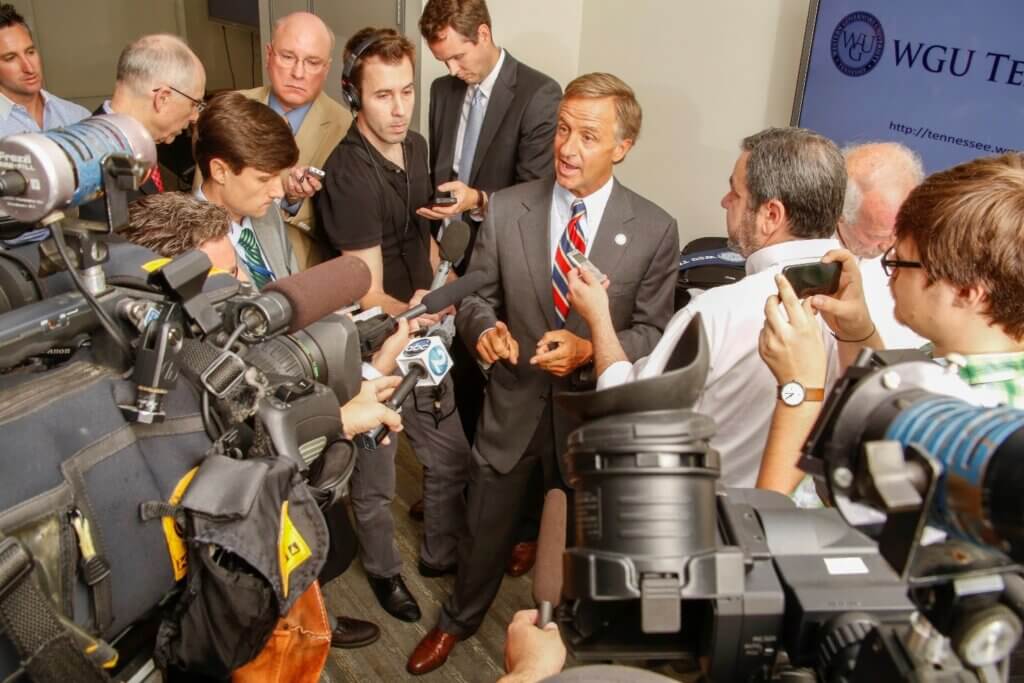
Governor Haslam’s one-time, $5 million investment in WGU back in 2013 has turned into more than $9.4 million in scholarships distributed across Tennessee, nearly doubling the original outlay.
However, there is still much work to do. According to the Tennessee Hospital Association, the state faces a shortfall of 8,500 registered nurses through 2035. As the school year begins, Tennessee is also facing a shortage of more than 1,400 teaching positions across the state. WGU can help upskill adults to meet these workforce needs, especially in rural areas.
Looking ahead, we remain focused on achieving a more educated workforce to better meet the needs of the state of Tennessee. We’re launching new degrees and certificate programs as industries change and career focuses shift. WGU recently acquired Nashville-based Craft Education, a technology platform that integrates work-based learning experiences to expand degree apprenticeship programs.
In WGU’s next 12 years and beyond in Tennessee, we will strive to increase our impact in the state and always continue innovating to better serve our students and local employers.
Kimberly K. Estep, Ph.D., is the Southeast Regional Vice President for accredited online Western Governors University.